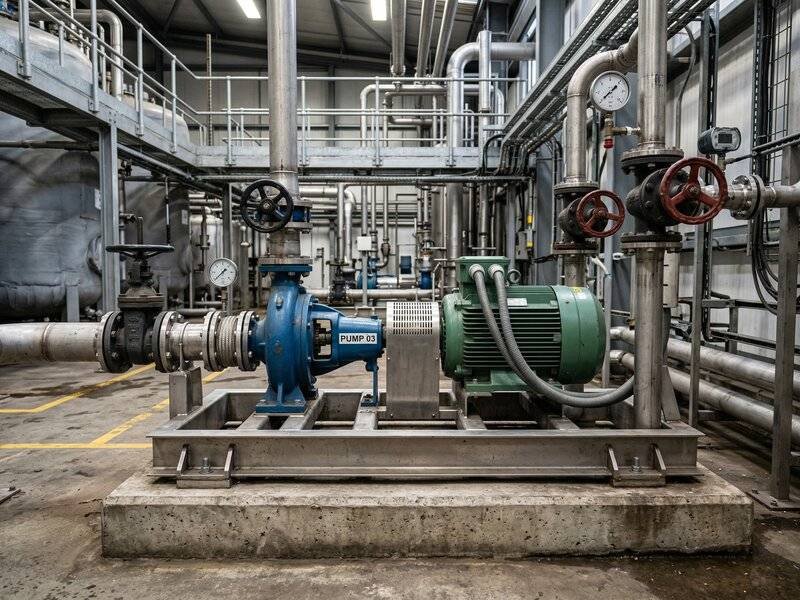
Filter Press Feed Pumps
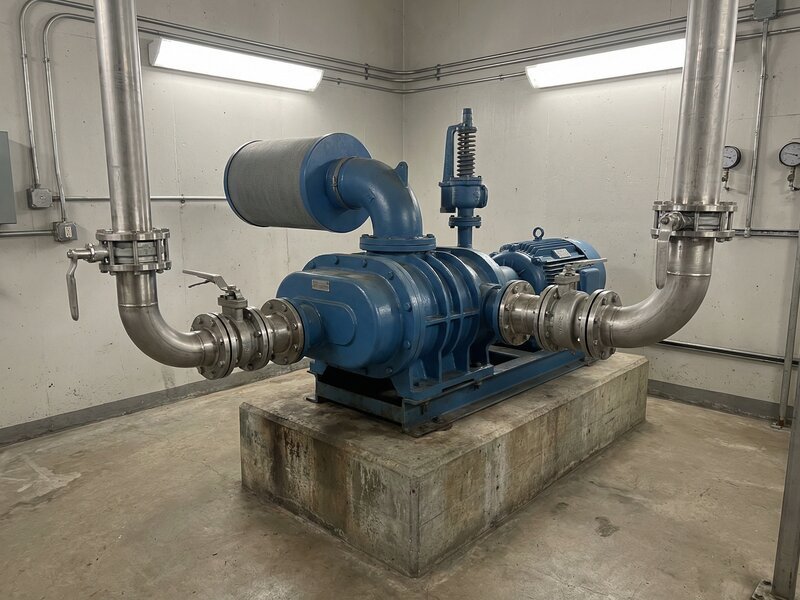
Feed pumps for chamber and membrane filter presses: progressive cavity, piston diaphragm, AODD and centrifugal pumps up to 16 bar, sized to your sludge and press.
Technical Specifications
| Pump types | Progressive cavity · piston diaphragm · AODD · centrifugal |
|---|---|
| Flow rate | 0.5 – 150 m³/h in the filling stage |
| Feed pressure | Up to 16 bar (higher on request) |
| Feed solids | 1 – 40 % DS, depending on the pump type |
| Wetted materials | Cast iron, 1.4301 / 1.4404, duplex · NBR, EPDM, FKM, PTFE |
| Drive | Geared motor with frequency converter, or compressed air (AODD) |
| Control | Pressure transmitter, pressure-step ramp, dry-run and over-pressure protection |
| Standards | CE · Machinery Directive 2006/42/EC · ATEX on request |
Key Features
- Pump type matched to sludge and press: progressive cavity, piston diaphragm, AODD or centrifugal
- Feed pressures up to 16 bar for chamber filter presses, with separate filling and pressing stages
- Frequency converter with pressure control for a gentle, floc-preserving filling curve
- Abrasion- and chemical-resistant materials: stainless steel, duplex, NBR, EPDM, FKM, PTFE
- Dry-run protection, safety valve and pulsation damper as part of the pump package
- Replacement pumps for existing presses of any make, with matching connections and controls
Applications
- Municipal sewage sludge dewatering with chamber filter presses
- Metal hydroxide and electroplating sludge
- Mineral, mining and gravel-wash slurries
- Chemical and pharmaceutical process sludge
- Food, beverage and brewery sludge
- Waterworks sludge from iron removal and lime softening
Product Overview
A filter press feed pump has to do two opposite jobs in one cycle: fill the empty chambers quickly at low pressure, then keep pressing sludge into the growing cake against a back-pressure of up to 15–16 bar while the flow falls towards zero. CM Aquatechnik selects and supplies feed pumps for chamber and membrane filter presses, either as a replacement on an existing press or together with a new filter press for sludge dewatering.
We work with several pump manufacturers, including KSB, so the pump type follows your sludge and your press rather than a single product line. Progressive cavity pumps, piston diaphragm pumps, air-operated double diaphragm (AODD) pumps and centrifugal pumps are all used on filter presses. Each has a pressure range, a solids tolerance and an operating cost where it fits best.
Pump types for filter press feeding
| Pump type | Typical feed pressure | Strengths | Limits | Typical use |
|---|---|---|---|---|
| Progressive cavity (eccentric screw) | Up to 12–16 bar (2 to 4 stages) | Low-shear, steady flow keeps flocs intact; easy to control with a frequency converter | Stator wear with abrasive sludge; must not run dry | Conditioned municipal and industrial sludge |
| Piston diaphragm | Up to 16 bar and above | Flow falls automatically as pressure rises; abrasion-resistant; low energy use at the end of the cycle | Higher investment; needs a pulsation damper | Abrasive mineral, chemical and metal hydroxide sludge; large presses |
| AODD (air-operated double diaphragm) | Up to 7–8 bar, about 16 bar with a pressure booster | Stops by itself at the set air pressure; can run dry; simple and low-cost | Compressed-air consumption; lower end pressure without a booster | Small presses, batch and pilot operation |
| Centrifugal | Up to about 8–10 bar | High filling flow at low cost | Shears flocs; flow collapses as pressure rises | Fast filling stage, combined with a positive displacement pump for pressing |
Typical values. The right pump follows from the sludge analysis, the plate pressure rating and the cycle time you need.
How the feed cycle determines the pump
- Filling — the empty chambers are filled at high flow and low pressure, usually within 5 to 15 minutes, so that the cake builds evenly in every chamber.
- Filtration — as the cake grows, the pressure rises and the flow falls. A pressure transmitter and frequency converter raise the pressure in steps, for example 2, 4, 8 and 12 bar, so that the flocs are not destroyed.
- Final pressure — chamber presses are held at 10–15 bar until the filtrate flow is low. Membrane presses are fed at 6–8 bar and the membranes are then squeezed with water or air at up to 15 bar.
- End of cycle — feeding stops when the filtrate flow drops below a set value or after a set time. The core is blown out and the press opens.
Because most of the water leaves as filtrate, the pump moves many times the chamber volume in one cycle. Example: a press with 1 m³ chamber volume producing cake at 30 % dry solids holds about 360 kg of dry solids. With sludge at 3 % dry solids, the pump has to feed roughly 12 m³ per cycle, starting at 15–20 m³/h and ending below 1 m³/h.
Sizing data we need
- Press — chamber volume, filter area, plate size and the pressure rating of the plates (7, 10 or 15/16 bar).
- Sludge — origin, dry solids content of the feed, abrasiveness, particle size, pH and temperature.
- Conditioning — polymer, lime or ferric chloride, because conditioned flocs need a low-shear pump.
- Operation — cycles per day, target cake dryness and the filling time you want.
- Installation — suction conditions, pipe lengths, power supply and whether compressed air is available.
Our guide on selecting a filter press feed pump explains the comparison in more detail. Other pump types for water and wastewater plants are listed under pumps.
Materials and accessories
- Wetted parts — cast iron, stainless steel 1.4301 or 1.4404 and duplex; stators and diaphragms in NBR, EPDM, FKM or PTFE to suit the sludge chemistry.
- Protection — safety valve set below the plate pressure rating, dry-run protection for progressive cavity pumps, pulsation damper for diaphragm pumps.
- Control — pressure transmitter, frequency converter and a pressure-step programme, as a stand-alone panel or integrated into the press control.
- Options — macerator or strainer for fibrous sludge, flushing connection, ATEX design.
- Spare parts — rotors, stators and diaphragm kits. Stock availability in Neuss and lead times are confirmed with each quotation.
Frequently asked questions
Which pump is best for feeding a filter press?
It depends on the sludge and the pressure. Progressive cavity pumps are the usual choice for polymer-conditioned municipal and industrial sludge up to about 12 bar. Piston diaphragm pumps suit abrasive sludge and feed pressures of 15–16 bar. AODD pumps are common on small presses, and centrifugal pumps are used for the filling stage only.
What pressure does a filter press feed pump need?
Chamber filter presses are typically fed up to 10–15 bar, depending on the pressure rating of the plates. Membrane filter presses are fed at 6–8 bar and then squeezed at up to 15 bar. The pump must never exceed the plate rating, so a safety valve is part of every installation.
How is the feed pump controlled during the cycle?
A pressure transmitter on the feed line and a frequency converter raise the pressure in steps while the flow falls. The cycle ends when the filtrate flow drops below a set value or after a set time. AODD pumps regulate themselves through the air pressure.
Can you replace the feed pump on an existing press from another manufacturer?
Yes. We need the press data (chamber volume, plate pressure rating, feed connection), the sludge data and the duty of the existing pump. Where possible we match the connections and the control signals, so that the press control does not have to be changed.
Why is the filter cake still wet at the end of the cycle?
Common causes are a final feed pressure that is too low, a worn pump (for example the stator of a progressive cavity pump), a cycle that ends too early, poor sludge conditioning or blinded filter cloths. The pressure curve and the filtrate flow over the cycle show which of these applies.
What information do you need for a quotation?
The press size and plate pressure rating, the sludge type and dry solids content, the number of cycles per day and the available utilities. Send us your data and our engineers will prepare a technical and commercial proposal within 48 hours.
Last updated: · Technical data are typical values; the final design follows your water analysis and project data. Stock availability in Neuss and lead times are confirmed with the quotation.