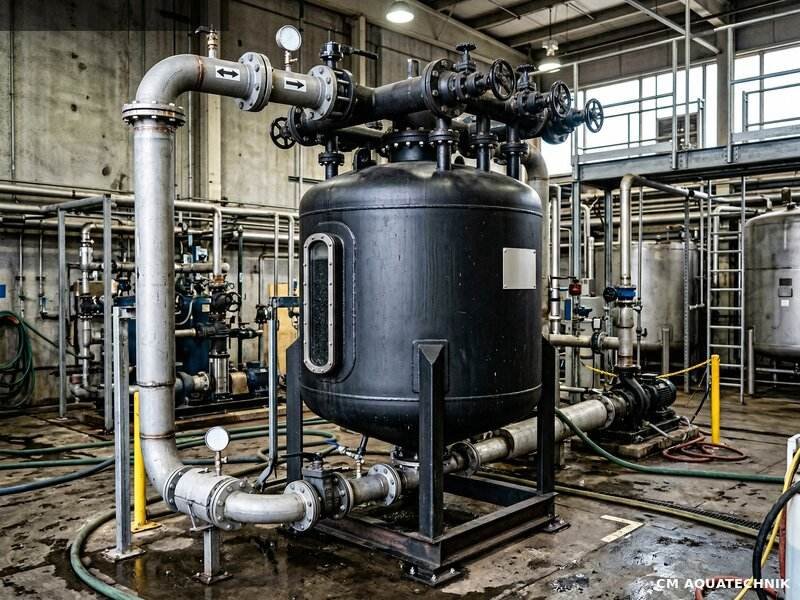
Activated Carbon Filters
CM Aquatechnik supplies granular activated carbon (GAC) filter systems for removal of chlorine, chloramines, trihalomethanes (THMs), total organic carbon (TOC), taste, and odour from drinking water an
Technical Specifications
| Flow Capacity | 0.2 – 200 m³/h per vessel |
| Chlorine Removal | > 99% (to < 0.05 mg/L) |
| Chloramine Removal | > 98% (catalytic carbon) |
| TOC Reduction | Up to 80% (dependent on contact time) |
| EBCT (min. design) | 5 – 15 minutes (application dependent) |
| Media Type | Coal-based GAC · coconut-shell GAC · catalytic |
| Iodine Number | 700 – 1,200 mg/g (media grade dependent) |
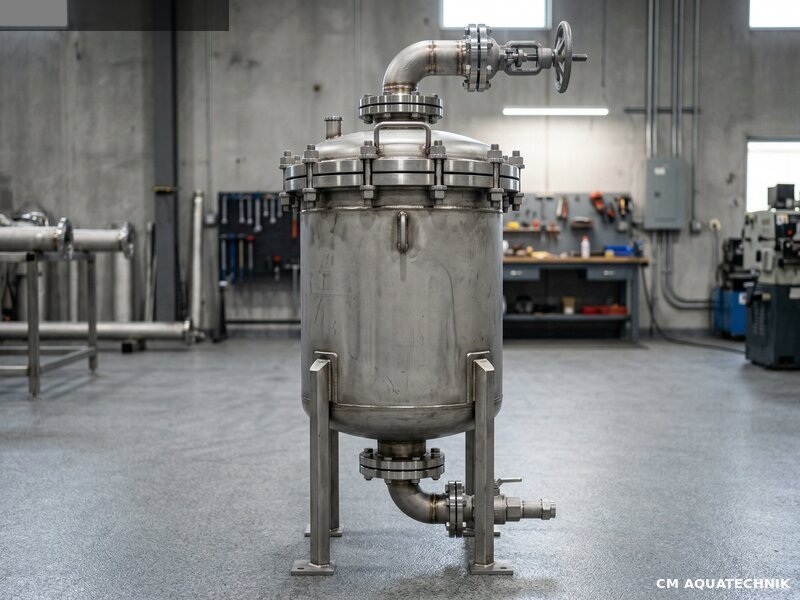
| Vessel Material | FRP (NSF61) · carbon steel epoxy |
| Service Life | 2 – 5 years before media replacement |
| Standards | NSF 42 · NSF 61 · AWWA B604 · CE |
Key Features
- Coconut-shell GAC provides highest surface area (1,000 m²/g+) for maximum capacity
- Catalytic carbon specifically removes chloramine — critical for RO membrane protection
- Automatic backwash maintains media porosity and prevents compaction
- Media top-up ports allow carbon addition without system shutdown
- Pre-loaded vessels available for fast delivery and commissioning
- Complete with all valves, gauges, and pressure differential indicator
Applications
- Municipal drinking water dechlorination
- Pharmaceutical water pre-treatment
- RO pre-treatment (chloramine removal)
- Food and beverage water treatment
- Industrial process water polishing
- Aquarium and fish farm water
Product Overview
CM Aquatechnik supplies granular activated carbon (GAC) filter systems for removal of chlorine, chloramines, trihalomethanes (THMs), total organic carbon (TOC), taste, and odour from drinking water and process water. Available in FRP and steel vessels with manual or automatic backwash control. Media options include coal-based GAC, coconut-shell GAC (highest surface area), and catalytic carbon for chloramine destruction.
Frequently asked questions
What does an activated carbon filter remove?
Granular activated carbon removes chlorine, chloramines, trihalomethanes (THMs), total organic carbon (TOC), taste and odour from drinking water and process water. Chlorine is reduced by more than 99% to below 0.05 mg/L, and TOC reduction of up to 80% is possible depending on the contact time.
Which type of activated carbon is right for my application?
Coal-based GAC is a versatile standard media, while coconut-shell GAC offers the highest surface area (1,000 m²/g and above) for maximum adsorption capacity. Catalytic carbon is the right choice where chloramine has to be removed, which is critical for protecting RO membranes.
How is an activated carbon filter sized and how often must the media be replaced?
The vessel is sized for a minimum empty bed contact time (EBCT) of typically 5–15 minutes, depending on the application, at flows from 0.2 to 200 m³/h per vessel. Regular backwashing keeps the bed porous and prevents compaction, and the media normally lasts 2–5 years before replacement, depending on the contaminant load.
What information do you need for a quotation?
Please tell us the flow rate, the contaminants to be removed and their concentrations (for example chlorine, chloramine or TOC), the application (drinking water, RO pre-treatment or process water), the operating pressure and temperature, your preferred vessel material and whether manual or automatic backwash control is required. Send us your requirements and we will prepare a proposal within 48 hours.