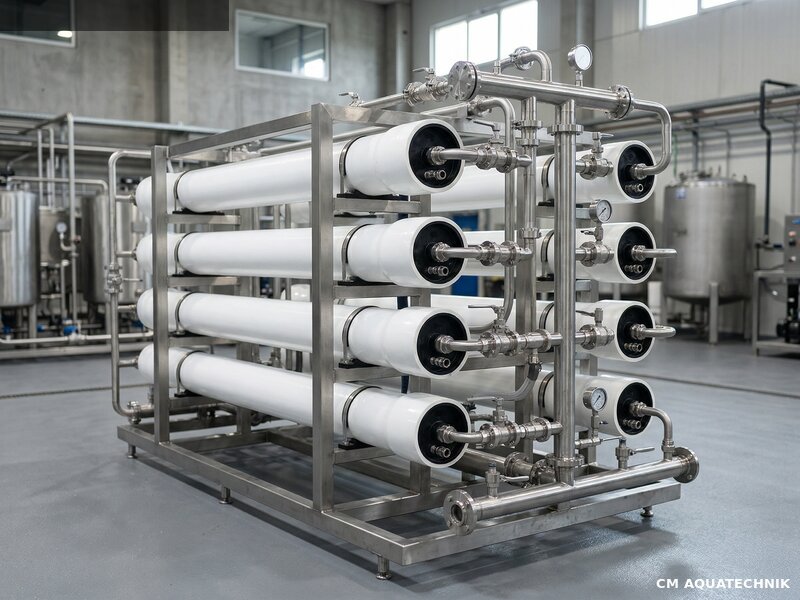
Membrane Pressure Vessels
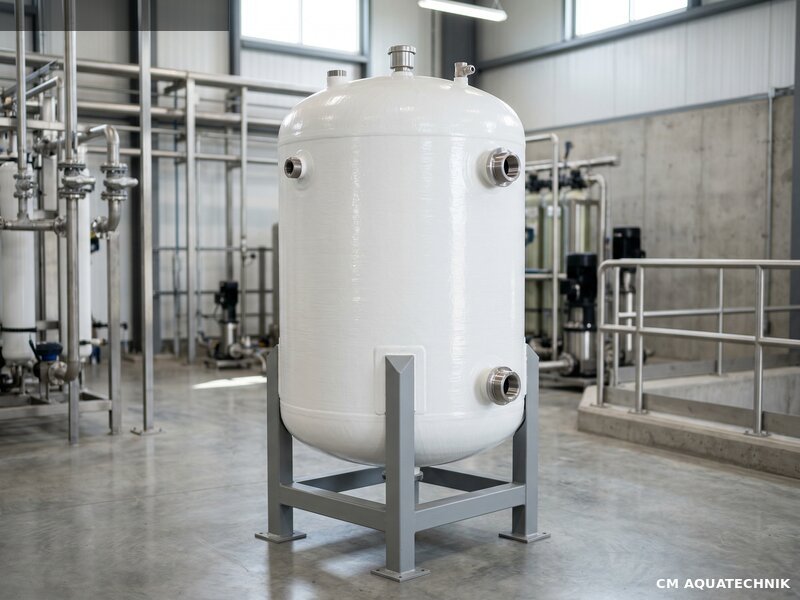
CM Aquatechnik supplies filament-wound FRP pressure vessels for housing spiral-wound RO and NF membrane elements. Available in 300 psi (20 bar) and 1,000 psi (69 bar) pressure ratings in 2.5", 4", and
Technical Specifications
| Diameter Options | 2.5", 4", 8" (standard) · 16" (special) |
| Pressure Rating | 300 psi (20 bar) · 1,000 psi (69 bar) |
| Elements per Vessel | 1 – 8 elements |
| End Cap Material | Glass-filled polypropylene |
| Vessel Material | Filament-wound fibreglass (FRP) |
| Port Configuration | End port or side port |
| Operating Temperature | −4 °C to +60 °C |
| Max Chlorine | Chlorine-resistant liner available |
| Standards | ASME, NSF 61 (liner option), CE |
| Connection Size | 1" – 3" ports (size-dependent) |
Key Features
- Compatible with all standard 4" and 8" spiral-wound elements
- 1,000 psi rating suitable for seawater high-pressure systems
- NSF61 food-grade liner available for drinking water
- Side port option simplifies manifold design and pressure drop
- Quick-change end cap design for fast membrane replacement
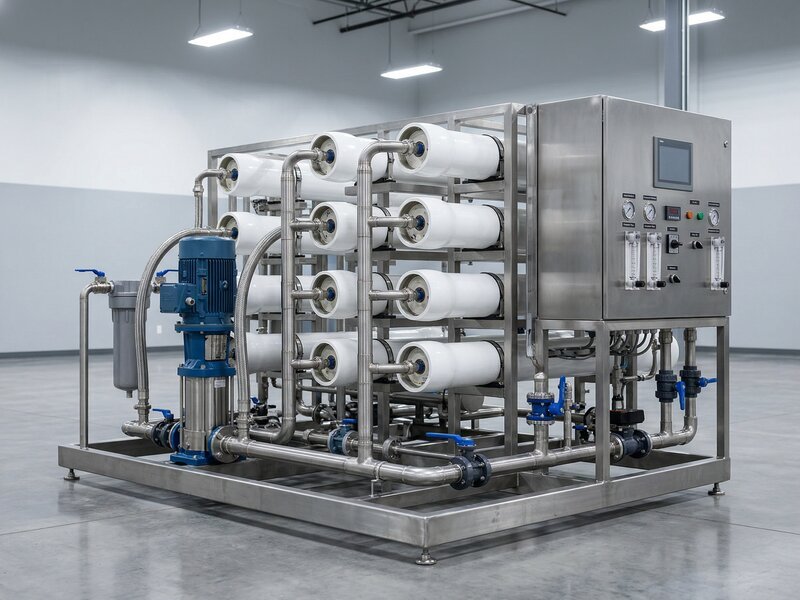
- Multiple element per vessel configuration minimises space and piping
Applications
- Industrial RO systems
- SWRO desalination
- NF nanofiltration systems
- Pharmaceutical water
- Food and beverage water treatment
- Municipal water treatment
Product Overview
CM Aquatechnik supplies filament-wound FRP pressure vessels for housing spiral-wound RO and NF membrane elements. Available in 300 psi (20 bar) and 1,000 psi (69 bar) pressure ratings in 2.5″, 4″, and 8″ diameters, with single-element to multi-element (1 to 8 elements per vessel) configurations.
End-port and side-port connection options accommodate all standard system design configurations. Full range of accessory fittings, interconnectors, brine seals, and thrust rings also available.
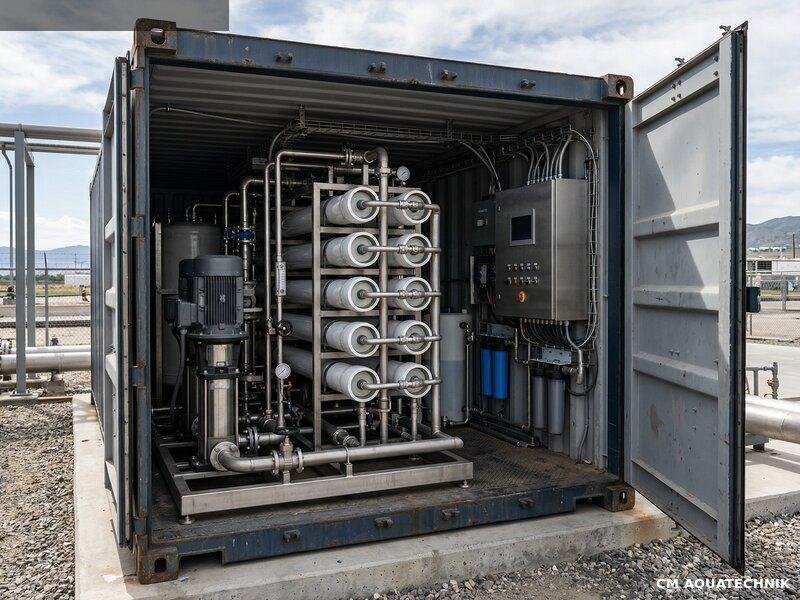
For desalination, the 1,000 psi (69 bar) rated vessels are used in our seawater reverse osmosis systems.
Frequently asked questions
Which pressure rating do I need for my membrane pressure vessels?
The pressure rating must exceed the maximum operating pressure of your RO or NF system. The 300 psi (20 bar) vessels are suitable for low-pressure applications such as brackish water and tap water RO or nanofiltration, while the 1,000 psi (69 bar) vessels are designed for seawater desalination. If in doubt, our engineers will check the rating against your system design.
How many membrane elements should be installed per vessel?
Our vessels accommodate 1 to 8 elements, and the number is defined by the system design, including the required flow, recovery and array configuration. Housing several elements in one vessel minimises space requirements and piping. Larger systems usually combine several multi-element vessels in parallel and in series.
What is the difference between end-port and side-port vessels?
End-port vessels have their feed, concentrate and permeate connections in the end caps, whereas side-port vessels have feed and concentrate connections on the vessel shell. Side ports simplify manifold design, reduce pressure drop and leave the end caps free, which makes membrane replacement quicker. Both options are compatible with all standard 4″ and 8″ spiral-wound elements.
What information do you need for a quotation?
Please tell us the element diameter and the number of elements per vessel, the maximum operating pressure and temperature, the preferred port configuration and connection size, the application (for example drinking water, which may require an NSF 61 liner), the quantity required and any accessories such as interconnectors, brine seals or thrust rings. Send us your requirements and we will prepare a proposal within 48 hours.